Tulum’s cenotes are natural limestone sinkholes filled with clear water from the underground rivers that run beneath the Yucatán. Some are open to the sky, some sit half under a rock ledge, and some are caves you swim into. They’re one of the easiest pleasures of a stay here: a short drive, a cool swim, and you’re back in time for lunch. When sargassum seaweed reaches the beach (usually late March through October), they’re at their best.
Inland, the water is fresh. Near the coast, where those rivers reach the sea, some cenotes turn brackish, a mix of fresh and salt water. Casa Cenote is one, and the Yal-Kú lagoon in Akumal is mostly sea water. Where the two waters meet, the view can go a little blurry, like looking through heat haze, then clears again.
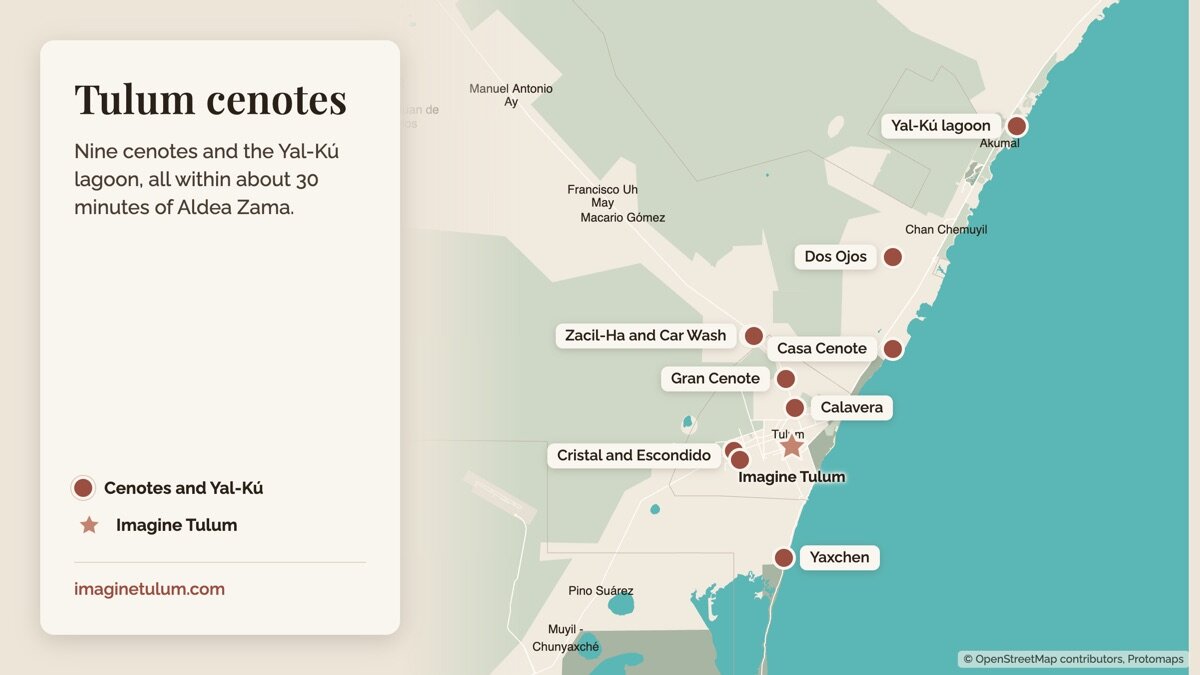
Nine cenotes are on our Tulum map, plus Yal-Kú, and all are within about half an hour of the penthouse in Aldea Zama. Most are under 15 minutes. Here’s what each one is like, what it costs, and how to get ready.
The map didn't load. Every place is listed below; each name opens it in Google Maps.
Distances are straight-line from the penthouse, rounded. Roads are longer.
Before you go: the rules every cenote shares
Each cenote sets its own rules, so the details vary. These hold almost everywhere:
- Shower first. Most cenotes have an outdoor shower by the entrance, and staff will ask you to rinse off before you get in.
- No sunscreen, bug spray or body lotion in the water. They leave a film on still water that the cenote can’t wash away. “Reef-safe” on a label has no legal meaning in Mexico, so don’t count on it getting you in. The easy answer is a long-sleeved swim shirt (rash guard) and a hat. Put sunscreen on after you swim, or well before you arrive at a cenote that allows it.
- Expect cooler water than the ocean. Cenotes stay around 75 °F (24 °C) all year. The Caribbean off Tulum runs a few degrees warmer, especially in summer, so the first step in is brisk, and the shaded and cave cenotes feel cooler still. It’s refreshing on a hot day, and a swim shirt keeps you comfortable for longer.
- Life jackets. Several cenotes require one, even for strong swimmers. They’re usually included or cost a few pesos to rent.
- Bring cash in pesos. Entry fees are paid at the gate, card machines are unreliable or add a surcharge, and life jackets, lockers and snorkel gear are often extra.
- Biking there? You can bike to the closer cenotes. Many sit at the end of a long dirt road, often potholed, which is rough on a cheap bike and turns muddy after rain. The Cobá road (Gran Cenote, Car Wash, Zacil-Ha) is a two-lane highway with no bike path, and the highway south to Cristal and Escondido is the same, only wider. With a sturdy bike and some confidence in traffic, it makes a good morning out.
- Look, don’t touch. Stay off the rock formations, don’t feed the fish or turtles, stay inside the roped swimming areas, and never swim into a cave beyond the daylight zone without a certified guide.
What to bring
- Pesos in small bills, for entry, rentals, lockers and parking
- A swim shirt and a hat
- A towel (few cenotes rent them)
- Water shoes, for slippery limestone steps
- A mask and snorkel, if you have them (most cenotes rent them, along with life jackets)
- A waterproof phone pouch
- Drinking water, and a change of clothes for the drive back
- Sunscreen and bug spray for after, left in the bag until you’re done swimming
Want your own mask and snorkel? La Comer and Chedraui, the big supermarkets in town, sell them. Both are on our Tulum map.
Some gates charge extra for a GoPro or a large camera, so ask when you buy your ticket.
Tulum cenotes on our map
Drive times are from the penthouse. Prices are what visitors were paying in late 2026; where reports differ, we give the range. They change often, and Mexican residents usually pay less. Check the board at the gate.
Cenote Calavera: the one you jump into
About 5 minutes by car · around 250–300 pesos
Calavera (“skull”) is a cave pool under the jungle floor, reached through three holes in the rock that make its “face”. The fun here is the jump: you step off the edge and drop into the clear water below, then climb out by a wooden ladder. Sunlight comes in through the openings. It’s small and usually quiet, with hammocks to rest in between swims. The water is deep with no shallow end, so it suits confident swimmers. Everyone else can rent a life jacket.
Cenote Cristal and Cenote Escondido: two for one ticket
About 7–11 minutes · around 250–300 pesos covers both
These two face each other across the highway just south of town, and one ticket gets you into both. Cristal is open and sunny, with a wooden jump platform about 10 feet up, wooden platforms to lie out on, and hammocks. Escondido (“hidden”), also called Mayan Blue, is a long, narrow channel shaded by overhanging jungle, with a rope swing and a quieter feel. It’s also an entry point for cave divers. Both rent snorkels and life jackets. Spend the morning at one and cross the road for the afternoon.
Gran Cenote: turtles and clear water
About 7 minutes · around 400–500 pesos
Gran Cenote is the most famous cenote near Tulum, and the water clarity explains why. It’s half open and half cave: you can float among lily pads in the sunlit pool, watch small freshwater turtles go about their day, then snorkel under the rock ledge to see the formations and the bats roosting overhead. Wooden walkways, showers, lockers and snorkel and life-jacket rentals make it an easy first cenote. It’s also the busiest. Arrive right at opening (around 8 am), before the tour vans get there around 9, and you’ll have it nearly to yourself.
Cenote Car Wash (Aktun Ha): the local favorite
About 10 minutes · around 200–300 pesos
The name comes from taxi drivers who used to wash their cars here. Today it’s a wide, calm pool with lily pads and very clear water, and one of the quietest cenotes on the Cobá road. A local on r/tulum calls it “a bit of a hidden gem and a spot we locals go to a lot.” Snorkelers float over the lily pads, and divers head into the cave at one end to see submerged tree roots. Life jackets rent for about 20 pesos, and it’s worth bringing your own mask in case snorkel gear runs short.
Cenote Zacil-Ha: easy and family-friendly
About 12 minutes · around 200 pesos, plus a few pesos for the zip line
Zacil-Ha is a round, open cenote that looks like a pool someone dug in the jungle. It’s sunny and calm, with restrooms, showers and a small restaurant, and life jackets come with your ticket. The highlight is a short zip line that drops you into the water. It’s the easiest pick for kids and for anyone less sure in the water. Car Wash is right next door, so you can do both in one morning.
Cenote Yaxchen: a quiet jungle stop near Sian Ka’an
About 12 minutes · pay at the entrance
Yaxchen is the cenote at Yaxchen Cabañas, on the beach road at Km 10.5, just before the Sian Ka’an gate. It’s set in the jungle, away from the busier cenotes on the Cobá road. Day visitors can walk up and pay at the entrance; the fee isn’t posted online, so bring pesos. Parking is limited to the guesthouse’s small lot, so a taxi saves you looking for a space. It’s an easy add-on to a day at the southern beaches or in Sian Ka’an.
Casa Cenote: snorkeling through the mangroves
About 14 minutes · around 200–500 pesos
Casa Cenote, also called Cenote Manatí, isn’t a round sinkhole at all. It’s a long, winding channel through the mangroves at Tankah Bay, a few steps from the sea, where fresh cenote water meets salt water, so it’s brackish. The water is calm and open, no more than about 6 metres deep, which makes it a favorite for an easy snorkel or a first dive, and you can rent a paddleboard to explore the channel. Look for small fish among the mangrove roots. The resident crocodile, a local celebrity named Panchito, mostly keeps to himself; give him space and follow the staff’s instructions. Go early, as it’s busier than it used to be. Photographers sometimes offer dive photos when you come out; they’re optional.
Dos Ojos: the famous cave system
About 30 minutes · around 350–400 pesos to swim; guided snorkel 600–800 pesos
Dos Ojos (“two eyes”) is two cenotes joined by an underwater cave. Snorkelers float through the cavern in clear blue water, with light falling through openings in the rock. The guided snorkel (about 45 minutes, gear included) is the way to see it, and some tours add the Bat Cave. It’s also one of the region’s best-known cave-dive sites. Dos Ojos is a park with several cenotes, each with its own entry fee. Phone signal is patchy, so download your map before you go. It pairs well with a morning at Akumal, a short drive further north.
Yal-Kú Lagoon: calm salt water for snorkeling
About 29 minutes · around 300–400 pesos, depending on the entrance
Yal-Kú isn’t a sinkhole but a long, sheltered lagoon in Akumal, where cenote water flows out to the Caribbean. It’s mostly salt water, so it feels like snorkeling in the sea without the waves. The water is shallow, about 1 to 4 metres, and calmest near the entrance, which makes it a gentle choice for beginners and kids. Sergeant majors, blue tang and parrotfish drift between the rocks and mangrove roots, and bronze and stone sculptures line the shore. Toward the mouth of the lagoon the current picks up, so stay in the inner part unless you’re a strong swimmer. The same rules apply as at the cenotes: no sunscreen or bug spray in the water, and shower first. There are two entrances run by different companies. The original one, on the left as you arrive, is the less expensive; the Yal-Kú Park entrance asks everyone to wear a life jacket. Both are open about 9 am to 5 pm. Mask, fins and lockers rent separately. Combine it with Akumal Bay’s turtles a few minutes away.
Tulum cenote prices at a glance
| Cenote | Type | Drive | Entry (late 2026) | Good for |
|---|---|---|---|---|
| Calavera | Cave, jump holes | 5 min | ~250–300 MXN | Jumping, confident swimmers |
| Cristal + Escondido | Open, shaded channel | 7–11 min | ~250–300 MXN for both | Platform jumps, rope swing, quiet |
| Gran Cenote | Half open, half cave | 7 min | ~400–500 MXN | Turtles, snorkeling, first cenote |
| Car Wash (Aktun Ha) | Open, cave at one end | 10 min | ~200–300 MXN | Quiet swim, snorkeling |
| Zacil-Ha | Open, pool-like | 12 min | ~200 MXN | Kids, zip line |
| Yaxchen | Jungle, at a lodge | 12 min | Pay at the entrance | A quiet stop near Sian Ka’an |
| Casa Cenote | Mangrove channel, brackish | 14 min | ~200–500 MXN | Easy snorkel, first dive |
| Dos Ojos | Cave system | 30 min | ~350–400 MXN | Guided cave snorkel, diving |
| Yal-Kú Lagoon | Sheltered lagoon, salt water | 29 min | ~300–400 MXN | Calm sea snorkeling, beginners |
Planning a cenote day
- The Cobá road, west of town: Calavera, Gran Cenote, Car Wash and Zacil-Ha are all along it. Two in a morning is a comfortable pace, and the Cobá ruins are further along the same road if you want a full day.
- South of town: Cristal and Escondido share a ticket, and Yaxchen is on the beach road toward Sian Ka’an.
- North toward Akumal: Casa Cenote and Dos Ojos make a half day, and Yal-Kú and the turtles at Akumal Bay are a few minutes further.
- Go early. Most cenotes open between 8 and 9 am. The first hour is the quietest, and the water is at its clearest.
- Getting there: taxis and ride apps like inDrive and Uber reach all of them, and a rental car or scooter gives you the most freedom. Biking works for the closer ones; see the note under “Before you go”.
Staying with us? Luli and Gaby can arrange cenote tours, drivers, bikes and scooters. Tell them which cenotes you have in mind, and they’ll help you plan the day. See the penthouse suites.
Frequently asked questions
Can I wear sunscreen in a cenote?
Not in the water. Most cenotes don’t allow regular sunscreen, bug spray or body lotion, and they’ll ask you to shower before you swim. “Reef-safe” labels aren’t a legal standard in Mexico, so the simplest approach is a long-sleeved swim shirt and a hat, with sunscreen on after you’re done.
Are cenotes cold?
They’re cooler than the ocean. Cenote water stays around 75 °F (24 °C) all year, a few degrees below the Caribbean, and cave cenotes feel cooler than open ones. Most people find it refreshing after the first minute.
Are cenotes fresh water or salt water?
Inland cenotes are fresh water. Near the coast, where the underground rivers meet the sea, some are brackish, a mix of fresh and salt: Casa Cenote is one. The Yal-Kú lagoon in Akumal is mostly salt water and calm, good for snorkeling without waves.
How much do Tulum cenotes cost?
In late 2026, visitors were paying about 200 to 500 pesos per cenote (Zacil-Ha at the low end; Gran Cenote and Casa Cenote at the top), with Cristal and Escondido sharing one ticket. Bring cash in pesos; life jackets, lockers, snorkel gear and camera fees are often extra.
Are cenotes safe to swim in?
Yes, when you follow each site’s rules. The popular cenotes have staff on hand, roped swimming areas and life jackets, and several require a life jacket even for strong swimmers. Watch your footing on wet limestone steps, pick an open cenote like Zacil-Ha or Gran Cenote if you’re not a confident swimmer (Calavera is deep with no shallow end), and never swim into a cave beyond the daylight zone without a certified guide.
Which cenote is easiest for kids or nervous swimmers?
Zacil-Ha is open, sunny and calm, and life jackets come with the ticket. Gran Cenote has walkways, life jackets and shallow sections. Casa Cenote is calm open water, and the inner part of the Yal-Kú lagoon is shallow and sheltered. Calavera is deep with no shallow end, so it’s better for confident swimmers.
Do I need a tour to visit a cenote?
No. You can drive or take a taxi to all of them and pay at the gate. A guide is worth it at Dos Ojos, where the guided snorkel takes you through the cavern, and it’s required for any cave diving.
What should I bring to a cenote?
Pesos in small bills, a swim shirt and hat, a towel, water shoes, a mask and snorkel (most cenotes also rent them), a waterproof phone pouch and drinking water. Keep sunscreen and bug spray for after your swim.
Do you need water shoes for cenotes in Tulum?
They aren’t required, but they’re worth packing. The steps, ladders and rock edges are wet limestone and get slippery, and water shoes give you a better grip getting in and out.
Sources: entry prices, hours and rules from The Tulum Times, Por Esto and recent visitor reports on r/tulum; Yal-Kú from Yal-Kú Park and Mexico Cenotes and Ruins. Checked November 2026. Prices change often; the gate board is the final word.