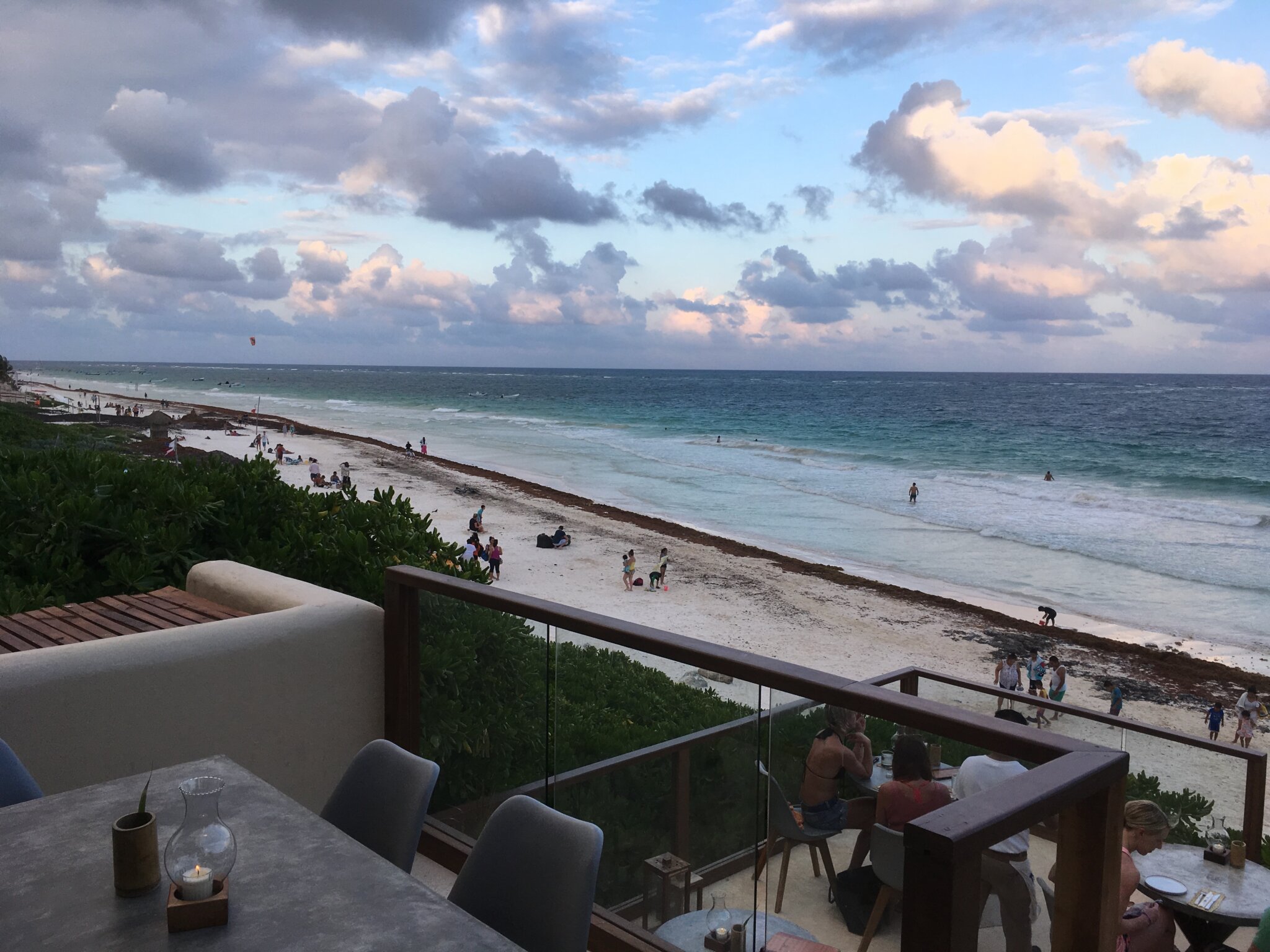
Plan Tulum Renace (which we covered in our first post on it) confirmed 10 free public beach access points across Tulum. Here’s where they are — and, more useful for planning an actual beach day, what you’ll genuinely pay to get onto the sand. Short version: less than you’d think.
What it actually costs
Getting to the beach itself is free. That applies on both sides of Tulum — the beaches inside Parque del Jaguar and the ones in the Hotel Zone. There’s no gate fee, no wristband, and no nationality-based pricing just to walk onto the sand.
Where money does come up, it’s for things that are genuinely optional, and it’s worth keeping them straight because they get conflated constantly:
- Parque del Jaguar’s facilities — the museum, lighthouse, walking trails and rest areas. Free for Mexican nationals. For foreign visitors the picture is murkier: some outlets report a small entry fee, but the government’s own announcement doesn’t specify one separately from the ruins ticket below. Either way it’s optional — skip the facilities and walk straight to the beach for nothing.
- The archaeological zone (the ruins) — a separate ticket again: 80 pesos for Mexican nationals, 265 pesos for foreign visitors. Free on Sundays for Mexican nationals and residents. This is a unified rate that already includes the CONANP protected-area charge.
- Parking, loungers, bathrooms, food. Free access to the shoreline doesn’t mean free everything once you’re there. If you drive, budget for parking; if you bike, that cost disappears.
Those park and ruins rates were cut by federal decree on 20 July 2026 and are set to hold through 2026 and 2027 — so if you read an older guide quoting 300–400 pesos to get into Parque del Jaguar, that figure is out of date.
The map
(Interactive — pan and zoom to explore. Every pin is an independently verified location, and each one links straight to Google Maps so you can save it to your own list before you travel.)
Parque del Jaguar beaches — free, and quieter
Four beaches inside the park have confirmed free public access, every day of the year, reachable through two dedicated beach entrances, roughly 8am to 5pm. Official signage at the access points reads “public access to the beach, completely free.”
- Playa Santa Fe — mapped above. Open in Google Maps →
- Playa Pescadores — next to Santa Fe, mapped above. Open in Google Maps →
- Playa Mangle — mapped above. Open in Google Maps →
- Playa Maya — mapped above, a few hundred metres south of Pescadores. Open in Google Maps →
There’s a real trade-off in favour of this side beyond cost. The park enforces its own rules — no amplified music, no single-use plastic bottles — so it stays genuinely calm in a way the Hotel Zone doesn’t. Keeping cars out of the beach areas does as much for the atmosphere as any of it: no traffic noise, no exhaust, nobody hunting for a parking spot behind you. It’s a noticeably more pleasant place to spend a day.
You don’t have to bring everything with you either. There are standalone restaurants along this side, plus rental stands near the access points where you can hire a lounger or palapa for the day. They’re priced individually, so you’re not signing up for the minimum-spend commitment a beach club would ask for — pay for a chair if you want one, or bring a towel and skip it entirely.
Hotel Zone — also free, and closer to everything
No entry gate here either. You’re paying for parking if you drive, and nothing at all if you bike (see Getting Around Tulum for rental info).
- Playa Conchita — kilometer 4.5 of the coastal road. Open in Google Maps →
- Playa del Pueblo — kilometer 5.5, the southernmost of the confirmed points. Open in Google Maps →
These two aren’t beach clubs themselves, but they sit in the same stretch as some that are, so don’t expect total silence. Worth knowing: a number of nearby hotels and beach clubs have also dropped their cover charges and minimum-spend requirements, which is a separate arrangement with its own rules.
Getting there by bike
If you’re staying in Aldea Zama, cycling to the park side is the easiest way in. There’s a bike path most of the way to the entrance, and there are places to lock up at the Playa Maya entrance — so you can leave the bike there and continue on foot, or take the electric shuttle. The shuttle is optional and costs 20 pesos per adult, 10 per child; walking and cycling inside the park are free.
The park side is also simply the better ride. The roads inside are newly paved and carry far less car traffic. The hotel-zone road is the opposite — narrow, pothole-ridden, and congested through tourist season.
Driving is more complicated, and worth understanding before you set out. The two beach entrances work differently. One is non-motorized only — you leave the car in a lot nearby and continue on foot or by bike, roughly 2 km to the sand. Reported parking prices there vary (we’ve seen figures from about 100 to 160 pesos for the day, and one entrance described as free), so treat it as a small cost rather than a fixed one. The other entrance admits cars, but only with a confirmed reservation at one of the beach clubs, hotels or restaurants inside the park — expect to show it on your phone at the gate. With that reservation you park at the venue itself, and an electric cart runs down to Playa Maya.
So yes, the restaurants and hotels inside the park still have parking — you just need to be booked in to use it. Mezzanine, the cliffside Thai place at kilometre 4.4, sits inside the park boundary and is a good example: reserve a table and you can drive in and park there, a short hop from Playa Paraíso. That’s the honest catch in the current setup, and a common local complaint — the beach itself is genuinely free, but arriving by car without a long walk generally means committing to a restaurant or club first. Cycling sidesteps the whole problem, which is why we’d point most guests that way. See Getting Around Tulum for bike rental options.
Our take: now that cost isn’t the deciding factor, pick on atmosphere. Want quiet? The park beaches. Want somewhere to eat or browse a few steps away? Conchita or del Pueblo — an inDrive ride or a rental bike gets you to either easily.
Still unconfirmed
Two of the points we’ve mapped don’t appear in the official free-access lists, so we’re not going to claim they’re free — or that they aren’t.
- Playa Ruinas — sits right by the archaeological zone and isn’t named among the park’s four free beaches, so reaching it may involve the ruins ticket. Open in Google Maps →
- Playa Las Palmas — mapped, but not named in any official free-access list we could find. Open in Google Maps →
What we don’t know yet
Plan Tulum Renace says 10 points total. We’ve named 8 across multiple sources and now have verified locations for all 8 — every one is on the map above. The remaining 2 points have never been publicly named, so there’s nothing to map yet. We’ll update this post as more specifics get verified, rather than guess at what they might be.
Fees and access confirmed via the Quintana Roo state government, the federal Plan Tulum Renace announcement, and Riviera Maya News. Rates set by federal decree on 20 July 2026, in effect through 2027.
Prefer not to think about parking or timing at all? The Studio Penthouse’s private rooftop plunge pool is right there whenever you want it, sargasso or not.
Frequently asked questions
Do you have to pay to get onto Tulum’s public beaches?
No. Beach access is free for everyone — locals, Mexican nationals and foreign visitors alike — at the Parque del Jaguar beaches (Santa Fe, Pescadores, Maya and Mangle) and in the Hotel Zone (Playa Conchita and Playa del Pueblo). There’s no gate fee or wristband to walk onto the sand. You may still pay for parking if you drive.
Is there a fee to enter Parque del Jaguar itself?
Entry to the park’s facilities — the museum, lighthouse, trails and rest areas — is free for Mexican nationals. For foreign visitors the government hasn’t specified a separate park-entry fee beyond the archaeological zone charge; the only park-specific cost stated explicitly is the 20-peso electric shuttle. None of it applies to reaching the beach, which is free for everyone.
How much does it cost to visit the Tulum ruins?
The archaeological zone is a separate ticket: 80 pesos for Mexican nationals and 265 pesos for foreign visitors, per INAH’s own published rates. It’s free on Sundays for Mexican nationals and residents, and there are exemptions for under-13s, over-60s, students and teachers with valid ID. That figure is a unified rate that already includes the CONANP protected-area charge.
What time can you access the beaches?
Roughly 8am to 5pm, daily and year round. Plan to be through the gate well before 5pm rather than right on it — the entrances close earlier than sunset, so a late-afternoon swim needs an early enough start.
Is the park side quieter than the Hotel Zone?
Yes. Parque del Jaguar bans amplified music and single-use plastic bottles by rule, so Santa Fe, Pescadores, Maya and Mangle stay genuinely calm. The Hotel Zone is livelier — Conchita and del Pueblo aren’t beach clubs themselves, but nearby clubs do play music, so some overflow noise is possible.
Which beach access point is best for most visitors?
Both sides are free now, so choose on atmosphere. For quiet, the Parque del Jaguar beaches. For somewhere to eat or shop within walking distance, Playa Conchita or Playa del Pueblo in the Hotel Zone.
Is the shuttle inside Parque del Jaguar free?
No — the electric shuttle costs 20 pesos per adult and 10 pesos per child. It’s entirely optional, though: walking or cycling through the park costs nothing.
Can you cycle to the beaches, and is there parking if you drive?
Yes, cycling is allowed and free — it’s the easiest way in. Parking is the harder part. One beach entrance is non-motorized only: leave the car in a nearby lot (reported prices vary, roughly 100–160 pesos for the day) and continue about 2 km on foot or by bike. The other lets cars in only with a confirmed reservation at a beach club, hotel or restaurant inside the park — you show it at the gate, park at the venue, and an electric cart runs to Playa Maya. Beach access is free either way, but driving in usually means booking somewhere first.
How many free beach access points does Tulum have now?
Plan Tulum Renace confirmed 10 free public beach access points as part of the 2026 tourism plan. Eight have been named in public reporting so far, and all eight are mapped above with verified locations. The remaining 2 haven’t been publicly named.